
Steps to Rapidly Transform Hardware into an IoT Device
1. Create a Product
The product definition acts as a blueprint for a specific category of device.
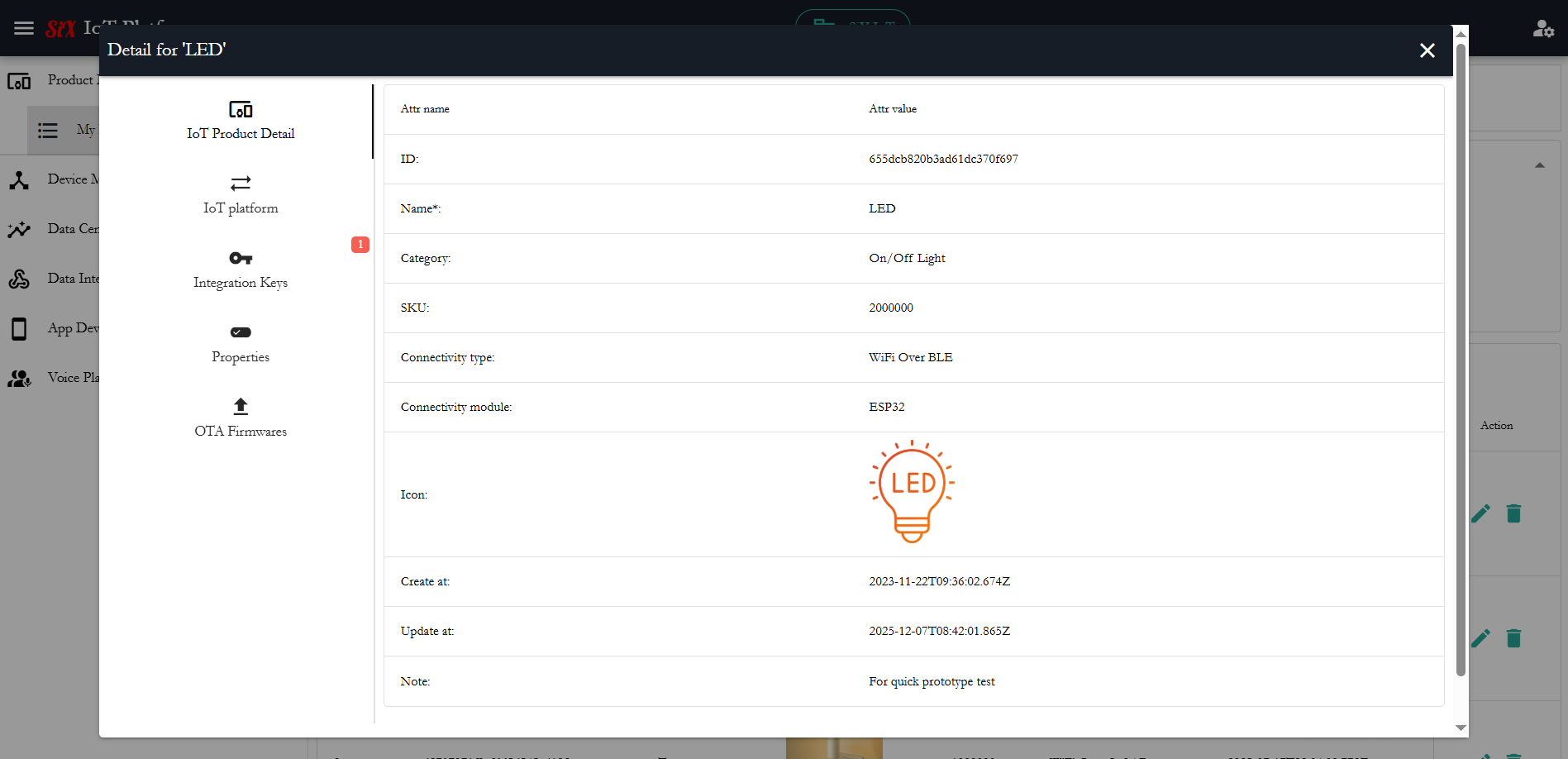
You can configure an IoT product with the following key features:
- IoT Platform: Specify the target IoT platform for connectivity. Currently, the system supports AWS IoT Core and the platform-native MQTT broker.
AWS IoT Core as the IoT Platform:
SiX IoT Platform offer the option to select AWS IoT Core as the primary IoT platform (MQTT Broker). In this configuration, devices and their corresponding certificates are automatically synchronized to AWS IoT Core upon registration.
This enables customers to seamlessly leverage AWS native services while simultaneously utilizing SiX IoT Platform for product management, custom App UI panel definitions, and cross-platform federation.
This federated approach delivers maximum value by combining AWS's operational power with our flexible identity and management ecosystem.
Identity Federation Setup
The platform establishes mutual trust between the customer's AWS environment and their SiX IoT Platform workspace via IAM federation. To enable this, you must configure the AWS IAM/Cognito settings within your workspace for the product and perform the corresponding configuration within the AWS Console.
- Integration Keys: Cryptographic keys used by automated factory or field procedures to securely register individual devices at scale.
How to use Integration Key:
Please refer to the general guide for how to use integration key: Integration with API Key
Properties: Define product-specific properties. When combined with the App SDK, these properties allow you to define custom UI panels tailored to the product's functionality.
OTA Firmwares: Upload, version, and manage Over-the-Air (OTA) firmware images for remote updates.
2. Register a Device
Device registration creates a unique digital identity (Digital Twin) for a specific hardware unit.
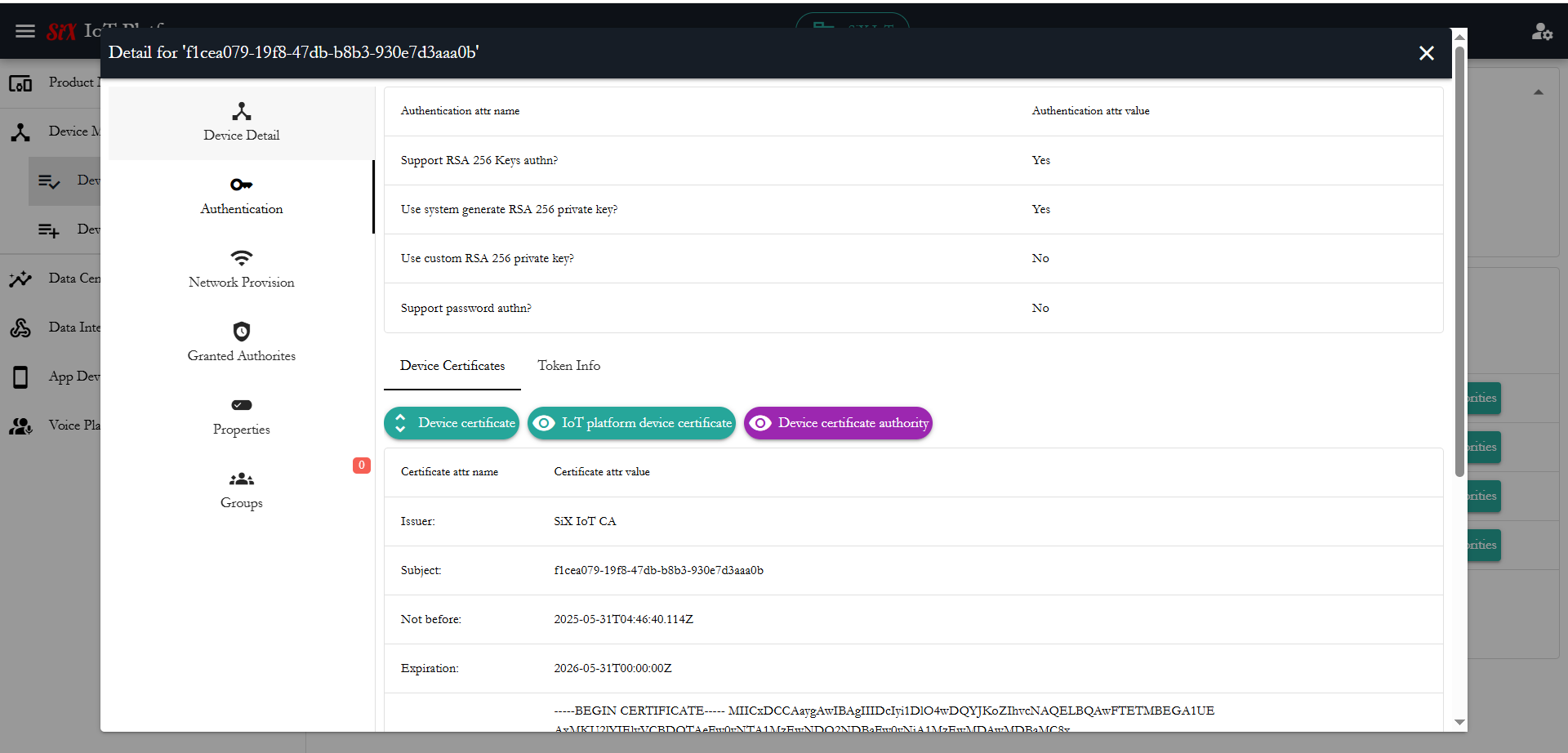
Individual device instances are managed with the following key features:
Authentication: Manages secure identity details, including X.509 certificates.
Network Provisioning: Configuration parameters and generated QR codes used to facilitate seamless network onboarding (e.g., Wi-Fi provisioning).
Granted Authorities (RBAC): Define specific permissions and access levels for the device by assigning Roles (Role-Based Access Control).
Proproties (ABAC): Define device-specific properties and metadata used for Attribute-Based Access Control and fine-grained policy enforcement.
Group Management: Assign the device to specific logical groups for collective management.